FloMo’s
 first UK trial
 delivers conclusive
 results.

Whiting-Tows-11--22

In May 2025, a 10-day trial in the western Irish Sea Nephrops fishery put FloMo head-to-head with the standard 300mm square-mesh panel.

Across 22 tows, the FloMo gear successfully met the primary trial objective by significantly reducing the bycatch of sub-MCRS (Minimum Conservation Reference Size) whiting.

• 59% reduction in sub-MCRS whiting bycatch in tows 1–11(even though there were some technical deployment issues in these tows).

• 74% reduction in tows 12–22 after minor gear adjustments with the FloMo setup.

Same fishery. Same conditions. Measured against the control trawl.

We acknowledge that we still have work to do with Nephrops size selectivity for tailed products but we’re confident we will be able to achieve that and deliver:

Less unwanted catch. Better selectivity. Smarter fishing.

That’s a win for fish stocks — and a win for fishers.

While retention of ‘whole’ Nephrops was similar across gears, overall catch rates with FloMo were lower than with traditional codends.

The results provided a promising starting point, but as is typical for any first-of-its-kind gear trial, with subsequent trials to then refine and optimise the design to achieve the desired outcomes.

Stay tuned for updates from recent New Zealand scampi trials as an example of FloMo’s potential to reduce bycatch and increase size selectivity without compromising on catch rates.

Read the full trial results here

FloMo. A better way to fish.

FloMo undergoes Flume Tank North Sea testing in Denmark.

Flume Tank North Sea

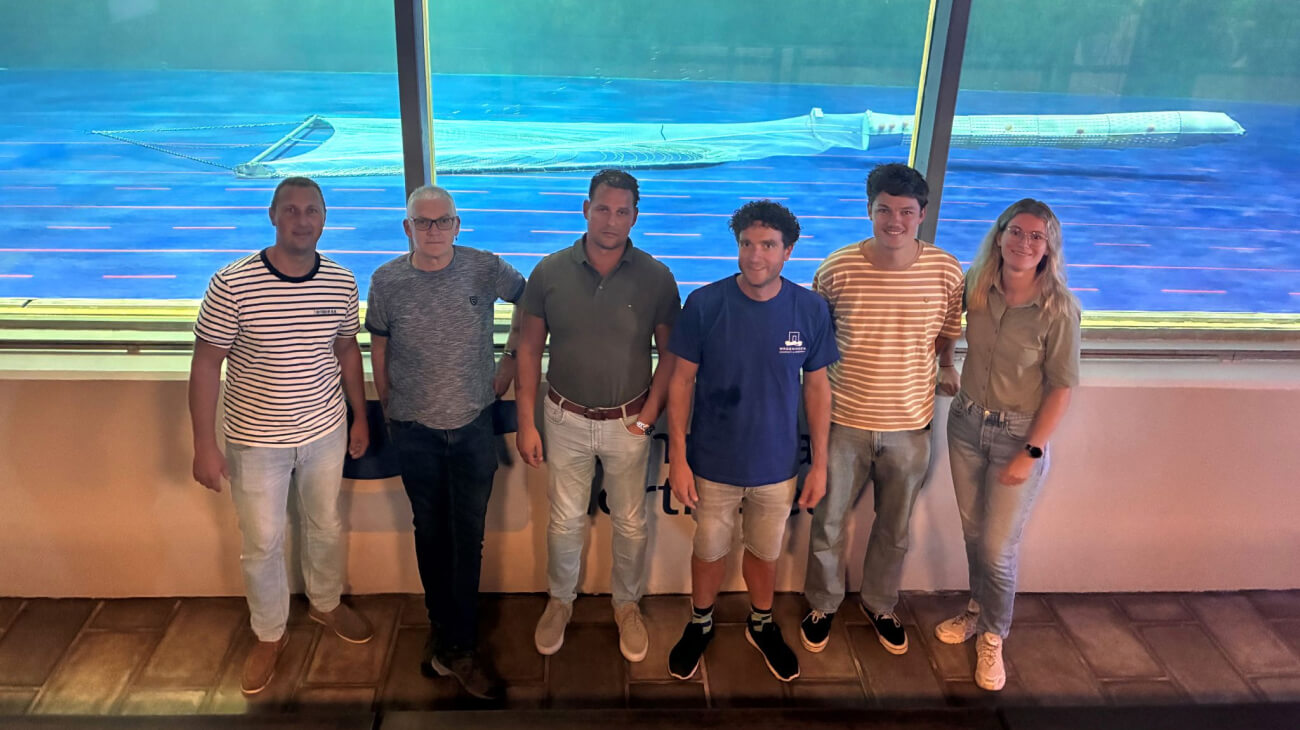
During August 2026, two FloMo codends were tested at the Flume Tank North Sea located at the North Sea Science Park (Nordsøen Forskerpark) in Hirtshals, Europe’s largest flume tank.

Over two days, researchers from Wageningen University & Research, together with representatives from the shrimp fisheries, sole fisheries and net makers, tested the codends under varying conditions in the flume tank.

Fisheries scientist, Pieke Molenaar, from Wageningen University & Research said, “We have had two very productive days, carrying out a wide range of tests that have given us interesting and useful results. These are results that would not have been possible to obtain in any other way,”

This trial continues FloMo’s increasing interest from international fishing and research markets to find more innovative ways to create a sustainable fishing future.

Read the full article from Nordsøen Forskerpark here(opens in new tab)

FloMo. A better way to fish.

FloMo receives regulatory approval for scampi.

Approved For Scampi

This is a proud FloMo moment.

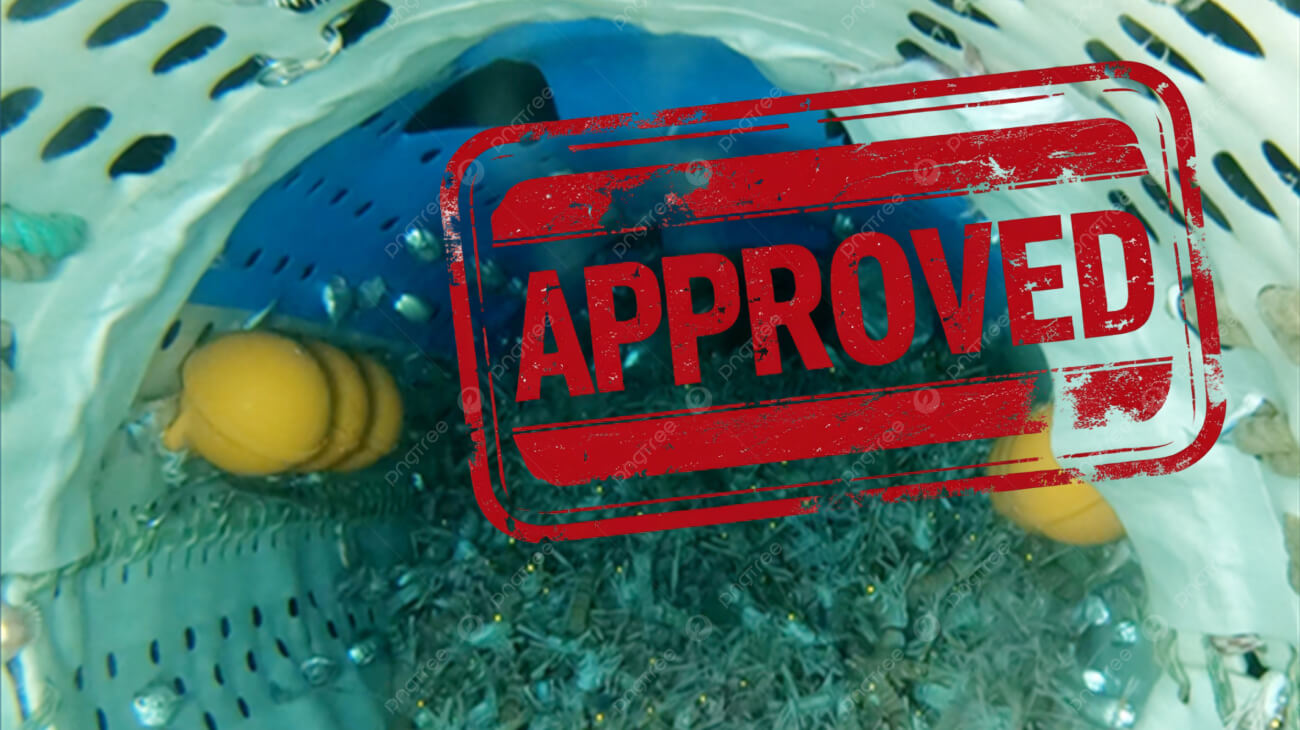
Fisheries NZ has approved the use of FloMo to target scampi, with the approval coming into force on 9 September 2026. This was based on trial results that demonstrated an approximate 60% reduction in discards, a 73% reduction in Sea Perch by-catch, and equivalent catch rates with improved size selectivity for larger Grade 1-3 scampi.

We’re incredibly proud of those stats, and they’re real validation for the benefits FloMo delivers. It’s a massive step forward for Precision Seafood Harvesting in New Zealand, as well as supporting our international trials and the application of FloMo in other crustacean fisheries, including prawns and shrimp.

A big thank you to everyone who has contributed to achieving this, especially the team at Bioeconomy Science Institute for the design and testing of the system, and SeaEagle Fishing Ltd for making their vessel available for the trials, as well as the skippers and crew who conducted the at-sea testing programme. What a team. 💪

FloMo. A better way to fish.

UK Fishing News showcases FloMo’s “really encouraging trials”.

UK Fishing News

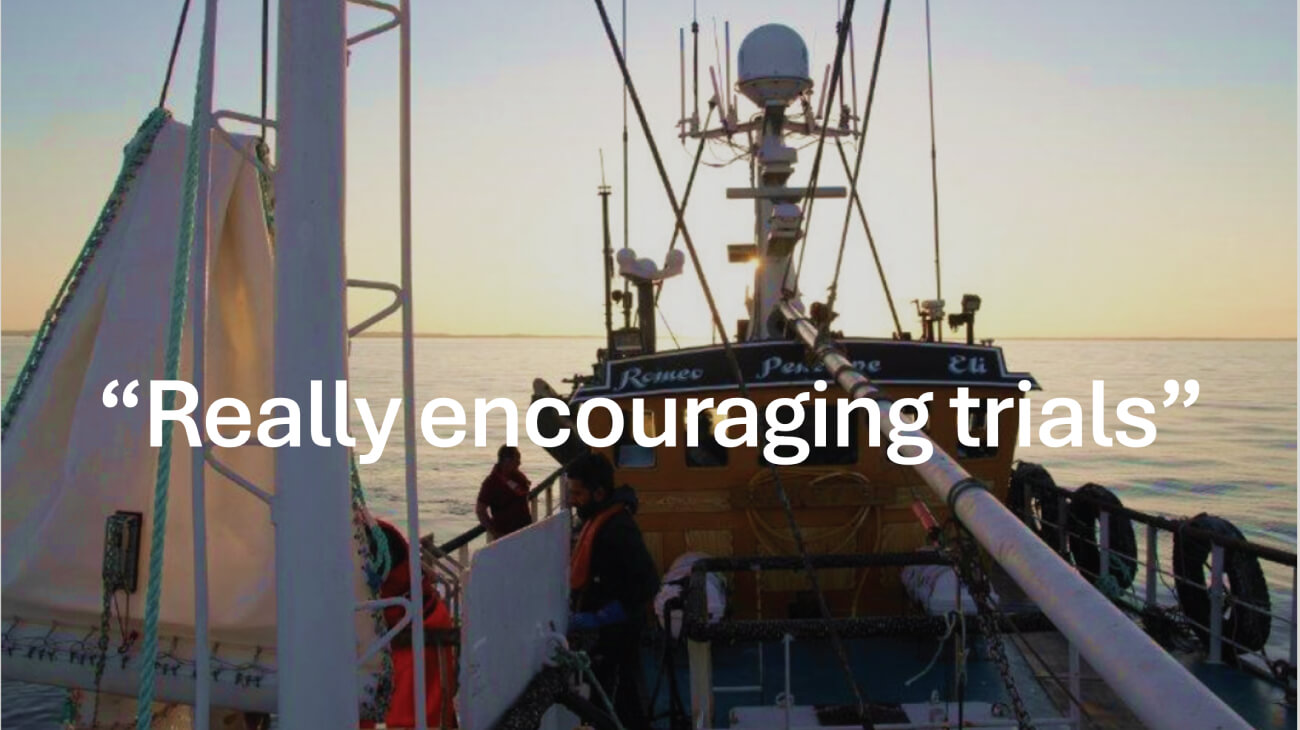
The August 2026 issue of the UK Fishing News shone a light on FloMo’s first Nephrops trials in the Irish Sea, capturing the attention of the European fishing market.

Run over 10 days on the Kilkeel-based prawn trawler Wakeful FR 261, a 22 m twin-rigger, the trial compared the performance of a prototype FloMo codend to a conventional Nephrops mesh trawl with an 80 mm diamond mesh codend and a 300 mm square mesh panel designed to release bycatch, in particular whiting.

Both caught similar catches of whole prawns, but FloMo saw significant reductions in the volume of smaller prawns caught, and whiting bycatch was 67% lower.

Identified by ICES scientists to be at critical levels, Irish Sea whiting is at risk of becoming a choke species in the Irish Sea Nephrops fishery. “The results in terms of reducing whiting bycatch, in particular those below Minimum Legal Size, were really encouraging,” said fisheries conservation technologist Ben Collier from fishermen’s co-operative Sea Source, who collaborated with the Seafish team and scientists from AFBI during the project.

That’s exactly what FloMo has been designed to do - give fishers greater control, improve catch selectivity, reduce unnecessary bycatch, and help support healthier fisheries for the future.

Read the full UK Fishing News article here(opens in new tab)

FloMo. A better way to fish.

A big step closer to detect and release in real time.

Hook and Net

“It’s a big step towards a future where catch selection starts before the gear even reaches the surface”, said CatchCam Technologies in their recent LinkedIn post.

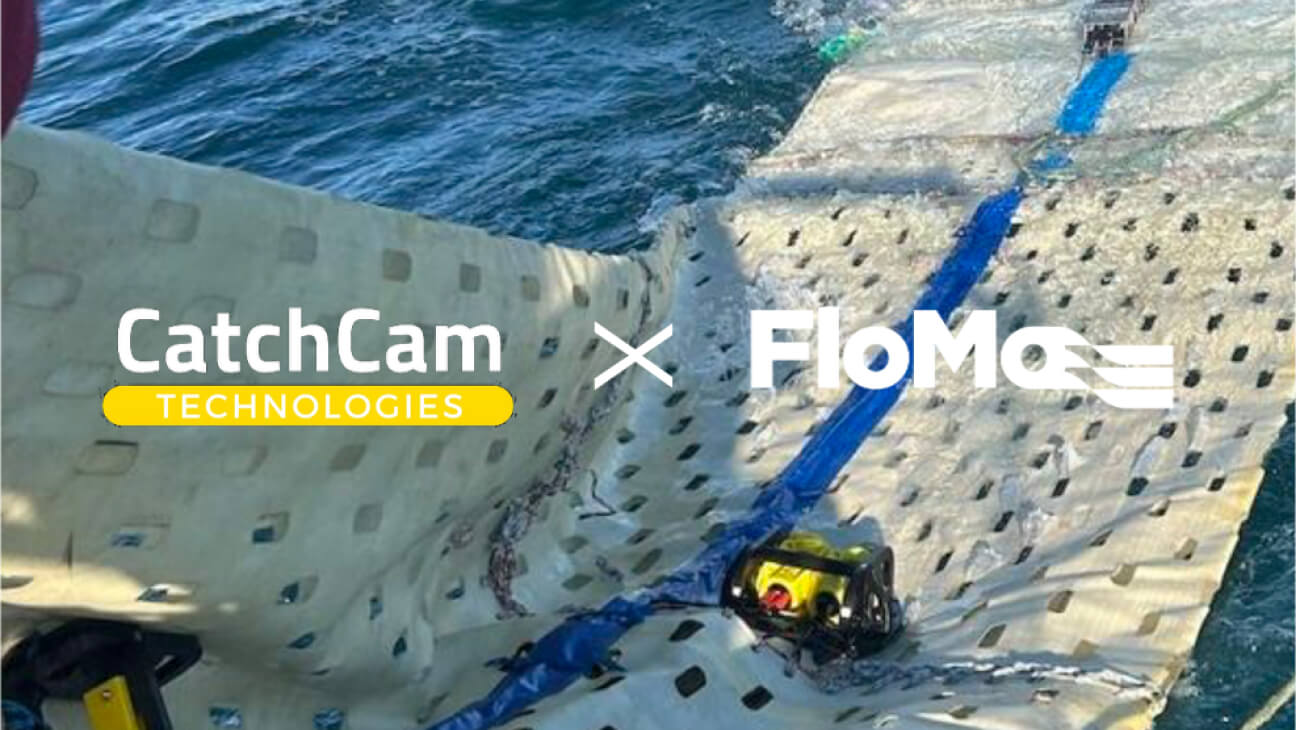
Precision Seafood Harvesting and Bioeconomy Science Institute collaborated with CatchCam Technologies to test a prototype imaging system placed inside the FloMo codend enabling the team to see a live catch in close to real-time.

Hook & Net covers the innovative trial conducted in the Tasman Bay of New Zealand onboard the 40-foot trawler, Okarito. Using an acoustic link, CatchCam transmitted images from the codend to the wheelhouse every few seconds, giving the skipper information needed to assess the catch before hauling. If required, the FloMo codend allows the skipper to remotely release, allowing the catch to escape at depth before hauling.

Every fisher knows the challenge of not being able to see unwanted catches and protected species until it’s too late so this is a significant innovation for the fishing industry.

While the imaging gear is a prototype, further development is taking place so it can become commercially ready, bringing the industry a big step closer to being able to detect and release.

Read the full Hook & Net article here(opens in new tab)

FloMo. A better way to fish.

FloMo Tesco News

Tesco

FloMo lands first prize in a significant UK sustainability competition for its commercial fishing innovation, FloMo.

Auckland, New Zealand — Precision Seafood Harvesting and its revolutionary commercial fishing innovation FloMo won the 2024 Tesco Agri T-Jam Competition against world-class competition from hundreds of entries.

The annual competition invites the world’s Agri-tech innovators to pitch their inventions to demonstrate how they can help Tesco's supply chain achieve sustainability goals, such as reaching net zero, protecting nature, and improving animal health and welfare.

FloMo’s revolutionary design and unique benefits designed to help the fishing industry, our oceans and their fish stocks thrive hooked the big one – a New Zealand first.

The prestigious first place prize secures FloMo fast-track introductions to Tesco’s supplier network, a trial with one of the retailer’s supply chain partners along with the FloMo team receiving mentoring from the Tesco Sustainable Agriculture & Fisheries team, Agri-TechE membership, and the opportunity to speak at the 2024 REAP conference on 6 November.

Natalie Smith, Head of Sustainable Agriculture at Tesco, said:

“We were really impressed with the standard of entries from all the finalists, but FloMo really stood out with their commitment to re-imagining the way we fish, addressing key challenges the fishing industry faces. We’re thrilled to welcome them to our network.”

On hearing the news that FloMo had won the competition, Dr André Pinkert, General Manager Commercial, FloMo said:

"I am thrilled to have participated in this year's Agri T-Jam and feel humbled that the Tesco judges chose FloMo to be the winner- especially considering the high calibre of the other finalists. We chose to apply because of the amazing opportunity the T-Jam provides, allowing us to establish a strong supply chain relationship with Tesco."

FloMo creates an aquarium-like, low-flow, low-turbulence environment that allows the catch to maintain their natural swimming motion through the trawl, which effectively means they aren’t strained out, exhausted or damaged by the traditional mesh cod end.

Over the last seven years, we have completed over 10,000 experimental tows and conducted numerous tests on key performance indicators, including survivability, selectivity and catch quality.

Results of these trials indicate that catch quality increases; there is a greater chance of survivability for returned catch, and a reduction in under-sized and juvenile fish being brought on board as the unique design of FloMo allows many of these fish to escape during the trawl.

Moana New Zealand CEO Steve Tarrant said:

We are proud to have been involved from the beginning with this innovative gear. I’d also like to acknowledge our contract fishers who helped us trial pilot nets—many who have quickly recognised its value, become early adopters of FloMo and continue to use it. Our contract fishers are the biggest users of this industry-changing gear, and we congratulate the team on this win and look forward to the next stage of the commercialisation of this technology.”

The FloMo team are very excited about the opportunities that winning the 2024 Tesco Agri T-Jam competition will deliver and is looking forward to working with and learning from Tesco’s sustainable agriculture and commercial experts.

The Tiaki Way

DSC01236

Tiaki – New Zealand launches a new method for harvesting premium seafood

Fishing the Tiaki way replaces traditional trawl nets with modular harvesting systems, a more sustainable way of fishing producing higher quality seafood.

When fishing in-shore species; Tiaki caught fish are brought on board alive, swimming in the water and in pristine condition. There is also the potential for an undersized or unintended catch to be returned to the sea with a much higher survivability rate.

When used to harvest deep water species such as Hoki, the new technology is reducing the damage to the fish, increasing the quality and adding significant value to the catch.

Crews fishing the Tiaki way – see how the technology works

Luke Jones, crew on Sanford’s Tengawai explains how the fishing method works.

Tiaki is the latest stage in the six-year Primary Growth Partnership between the Ministry for Primary Industries and three of our commercial fishing companies - Sanford, Sealord and Aotearoa Fisheries – representing a combined investment of 48 million dollars. The partnership was launched in 2012.

Ministry for Primary Industries Director-General Martyn Dunne says even though it is still being trialled Tiaki has already demonstrated huge potential.

“A lot of the industry players around the world are looking in at New Zealand and thinking this is wonderful.”

“What it is going to show to consumers in New Zealand and around the world is that we value our provenance story, we value the sustainability of our fishing stocks, and we have a story that we can tell the world of how these fish have been caught sustainably. The programme has around two years left to run, but we are seeing truly exciting progress.”

Programme manager for Precision Seafood Harvesting Dave Woods says there is increasing demand from consumers to be more connected to where their food comes from and the methods used to harvest it meant the commercial fishing industry needed to transform.

“This is a changing world, people are demanding to know where their seafood comes from and they are demanding that we care for the stocks of fisheries that we fish. We have to rise to that challenge and we have to use every available technology to do that.”

And that technology is not only working below the sea, Tiaki caught fish will come with its own traceability app meaning consumers can quickly find out more about where and how their fish was caught using their smartphone.

Underwater footage of fish being caught the Tiaki way

It has taken 10 years of New Zealand research and four years of trialling the technology on board boats to get to this point.

Precision Seafood Harvesting technology was developed by Plant & Food research, a crown research institute based in Nelson.

The team of 14 scientists, led by Alistair Jerrett, set themselves high goals in developing new ways to fish with the overall objective for PSH of improved survivability rates for unintended catch.

“The best case scenario is always release at depth, that juveniles are not even brought on board. But equally important is increasing survivability rates for those that are.”

Senior scientist Suzy Black says the commercialisation project still retains a strong element of innovation and development work.

“The great thing about this work is that we are learning more and more about the behaviour of fish – and it is very different from species to species.”

“With cameras on the nets we can see what is going on below the surface, and compare the number of juvenile fish coming on board the vessel with the number of fish actually interacting with the net.”

“Alongside this we are working on the handling systems on board, changes to vessels and the regulations around how we fish.”

Market potential

Tiaki caught fish is tipped to be a big earner and marks a move by the three companies involved towards value over volume.

CEO of Sealord Steve Yung says capitalising on the demand domestically and worldwide for premium seafood is important for industry.

“The bulk of NZ’s fish is exported so export is the lifeblood of industry here.”

“The quality of the Tiaki caught fish is really going to give us the opportunity to set New Zealand apart from the rest of the world and give us a competitive advantage, particularly in the markets of Asia.”

“In terms of the resource we have in New Zealand, it’s limited. The Tiaki brand and technology will allow us to take advantage of the fact that it is a limited resource that we care for, that we catch sustainably, and that we can add value to.”

The Government set a target of doubling the value of New Zealand’s primary industry sector exports to 64 billion dollars by 2025, and it is hoped Tiaki caught fish will make a significant contribution towards that.

Download all Videos(opens in new tab)

Download all Images(opens in new tab)

Tiaki Among "Winners" of 2016 Hi-Tech Awards

1200x630 Share Image

The inaugural Maori Innovation Award at the New Zealand Hi-Tech Awards has been won by Precision Seafood Harvesting for its revolutionary technology that does away with traditional trawl nets to allow fish to be landed alive and in perfect condition.

Read More

Precision Seafood Harvesting on Ocean Bounty

Screen-Shot-2017-07-07-at-4.14.45-PM

Three’s Ocean Bounty series has featured Precision Seafood Harvesting on two of their episodes. This episode of the programme follows Moana fisherman Sam Hayes and his crew on the Jay Debra as they use Precision Seafood Harvesting to produce high quality, fresh fish. This is a great watch to see how the PSH technology works and the changes it’s driving for the New Zealand seafood industry.

Precision Seafood Harvesting in New Zealand Series

Screen-Shot-2017-07-12-at-11.24.44-AM

Seafood New Zealand have put out a mini documentary series on New Zealand’s seafood industry. Precision Seafood Harvesting features in the episode on innovation. It’s a first look at the new onboard handling systems we’re using to improve the quality of our fish and increase the survivability of fish we return to the ocean.

Watch the episode featuring our technology here.